




















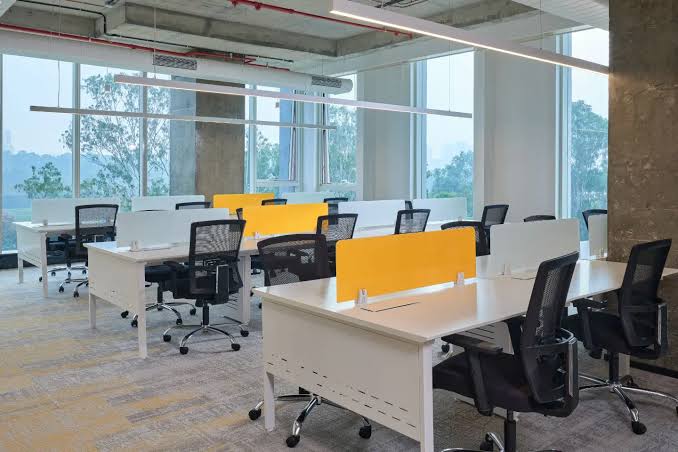
A well-planned corporate office space plays an important role in supporting business operations, employee productivity, collaboration, and long-term growth. For established companies and growing enterprises, an office is more than just a place where employees work. It can influence workplace efficiency, company culture, client interactions, and the overall experience of employees.
Choosing the right corporate office requires businesses to consider several factors, including location, office size, infrastructure, flexibility, amenities, and total occupancy costs.
What Is Corporate Office Space?
Corporate office space refers to a professional workplace designed to support the operations of a company or organisation. Depending on the business requirements, it may include private offices, dedicated workstations, meeting rooms, executive cabins, collaborative areas, reception spaces, and other facilities.
A corporate workspace may be established through a traditional commercial lease, a managed office arrangement, or another flexible workspace model.
The right solution depends on the company’s size, operational needs, budget, and future expansion plans.
Why Is Corporate Office Space Important?
The workplace can have a direct impact on how efficiently a business operates.
A well-designed office can provide employees with dedicated areas for focused work, meetings, collaboration, and informal discussions. It can also create a professional environment for meeting clients, partners, and other stakeholders.
For larger organisations, a suitable corporate office space can also support different departments and teams while providing the infrastructure required for smooth day-to-day operations.
Types of Corporate Office Space
Traditional Corporate Offices
Traditional offices usually involve leasing or owning a dedicated commercial property. This approach can provide businesses with greater control over office design, branding, layout, and infrastructure.
However, companies may also need to manage fit-outs, furniture, utilities, maintenance, security, and other workplace operations.
This model may suit organisations with stable, long-term office requirements.
Managed Corporate Offices
Managed office solutions provide businesses with professionally operated workspaces where various aspects of workplace infrastructure and facilities are handled by the provider.
Depending on the arrangement, businesses may have access to furnished workstations, meeting rooms, reception services, maintenance, technology infrastructure, and other amenities.
This can reduce some of the administrative effort associated with establishing and managing an independent office.
Serviced Corporate Offices
Serviced offices are generally ready-to-use workspaces that can allow businesses to establish operations more quickly.
They may be useful for companies setting up a regional branch, accommodating a project team, or expanding into a new market.
Flexible Corporate Workspaces
Flexible workspaces can provide options for businesses with changing team sizes or evolving operational requirements.
Companies should carefully review the commercial terms, expansion options, and available facilities before selecting a flexible office solution.
Key Factors to Consider When Choosing Corporate Office Space
Location and Accessibility
The office location can influence employee commutes, client meetings, and daily business operations.
A suitable location should offer convenient access through major roads or public transportation while also providing essential facilities nearby. Parking and accessibility for visitors may also be important considerations.
Office Size and Layout
Businesses should assess their current workspace needs as well as their expected growth.
The office may need to accommodate employees, meeting rooms, private cabins, collaborative areas, reception facilities, and specialised departments.
An efficient layout can help businesses use the available space effectively without paying for unnecessary square footage.
Infrastructure and Technology
Modern corporate offices often require reliable internet connectivity, power backup, security systems, meeting technology, and other essential infrastructure.
Businesses should evaluate whether the office can support their technology and operational requirements before making a long-term commitment.
Amenities and Workplace Experience
Amenities can contribute to employee comfort and productivity.
Depending on the business and office model, these may include meeting spaces, breakout areas, cafeterias, housekeeping, reception support, parking, and common facilities.
The importance of each amenity will vary depending on the organisation and its workforce.
Scalability
A business may require more space as its workforce grows.
Choosing a corporate office space with options for expansion can reduce the disruption associated with relocating an entire organisation. Scalability can be particularly important for companies experiencing rapid growth or planning to increase their workforce.
Total Occupancy Cost
Businesses should look beyond the base rental price when comparing office options.
The total cost may include maintenance charges, utilities, parking, fit-outs, technology services, security deposits, and other operational expenses.
Understanding the complete cost structure can help companies make more informed financial decisions.
Managed Office Space vs Traditional Corporate Office
Traditional and managed office models offer different advantages.
A traditional office may provide greater control over the design and branding of the workspace. However, it can require significant investment in setup and ongoing management.
A managed office can provide ready-to-use infrastructure and professionally managed facilities, which may reduce operational responsibilities.
Neither model is automatically the best choice. Businesses should compare costs, flexibility, customisation requirements, and long-term plans before making a decision.
How to Choose the Right Corporate Office Space
The first step is to define the business requirements clearly.
Consider the preferred location, number of employees, budget, required infrastructure, workplace amenities, and future expansion plans. These factors can help narrow down suitable options.
Once potential offices are shortlisted, visiting the locations can provide a better understanding of the actual workspace, building quality, accessibility, and surrounding environment.
Businesses should also carefully review lease agreements or workspace contracts before making a commitment.
Questions to Ask Before Finalising an Office
Before selecting a corporate workspace, businesses should clarify important details about the arrangement.
- What services and amenities are included in the quoted cost?
- Are maintenance and utility expenses charged separately?
- What is the lease or commitment period?
- Can the workspace be expanded in the future?
- Is the office customisable?
- What technology and infrastructure are available?
- What are the renewal and notice conditions?
- Are there any additional setup or operational costs?
Understanding these details can help businesses compare office solutions more effectively.
Benefits of a Well-Planned Corporate Office
A suitable office can support productivity, collaboration, employee comfort, and efficient business operations.
Dedicated areas for meetings, focused work, teamwork, and client interactions can help create a functional workplace environment. Reliable infrastructure and useful amenities can further improve the daily experience for employees.
For companies planning future growth, a scalable workspace can also provide flexibility and reduce the need for frequent relocation.
Frequently Asked Questions
What is corporate office space?
Corporate office space is a professional workplace designed to support a company’s employees, business operations, meetings, collaboration, and other organisational requirements.
What types of corporate offices are available?
Businesses can choose from traditional offices, managed offices, serviced offices, and flexible workspace solutions.
What should businesses consider before choosing a corporate office?
Important factors include location, accessibility, office size, layout, infrastructure, amenities, total occupancy costs, flexibility, and future growth requirements.
Is a managed office suitable for corporate businesses?
A managed office can be suitable for companies that want ready-to-use infrastructure and professionally managed workplace facilities. However, businesses should compare costs, services, flexibility, and customisation options before making a decision.
Final Thoughts
Choosing the right corporate office space requires businesses to look beyond the size of the property or the monthly rental cost.
The ideal workplace should support current operations while providing the infrastructure, flexibility, and scalability needed for future growth. By carefully evaluating location, office design, amenities, technology, total costs, and commercial terms, businesses can choose a workspace that supports both employees and long-term business objectives.