



















Gone are the days when “sending money to Europe” meant waiting three business days and crossing your fingers. If you’ve checked your bank app lately, you might have noticed a new speed setting. In 2026, the European payment landscape has hit a massive turning point. What used to be a premium “express” feature is now becoming the baseline standard for everyone.
SEPA instant payments are no longer just a luxury for tech-savvy startups; they are a regulatory mandate designed to keep the Eurozone competitive. But what does that mean for your wallet or your business operations? Let’s break down how this real-time revolution actually works.
What is SEPA Instant?
At its core, SEPA (Single Euro Payments Area) is a system that allows you to send Euros to 36 different countries as easily as a domestic transfer. SEPA Instant (formally known as SCT Inst) takes that framework and puts it on steroids.
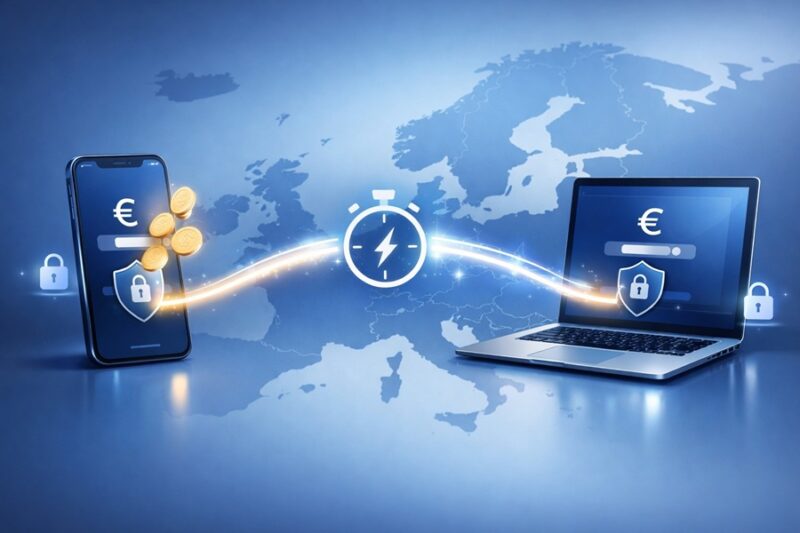
Instead of waiting for overnight batches or banking hours, funds move in under 10 seconds. This happens 24/7/365. Whether it’s 2:00 AM on a Sunday or a public holiday in Madrid, the money lands in the recipient’s account before you can even close your browser tab.
The “10-Second” Rule
The European Union isn’t just suggesting banks be fast; they are requiring it. Under the Instant Payments Regulation (IPR), banks must:
-
Process the transfer within 10 seconds.
-
Offer the service at the same price as a standard credit transfer (often free for consumers).
-
Verify the recipient’s name against their IBAN before the money leaves your account to prevent fraud.
SEPA vs. SEPA Instant: The Key Differences
Many people confuse the two, but in 2026, the gap is wider than ever. Here is a quick look at how they stack up:
| Feature | Standard SEPA | SEPA Instant |
| Speed | 1–2 Business Days | < 10 Seconds |
| Availability | Banking Hours (Mon–Fri) | 24/7/365 |
| Transaction Limit | Usually high/unlimited | Up to €100,000 (standard), often higher in 2026 |
| Cost | Usually free | Must match standard SEPA fees |
Why This Matters for Your Business
If you’re running a business, the shift to instant payments is a major win for your cash flow. You no longer have “money in transit” limbo.
-
Better Liquidity: You get paid instantly, meaning you can reinvest that capital or pay suppliers immediately.
-
Reduced Cart Abandonment: For e-commerce, instant payment confirmation means you can release goods or digital access the moment the customer clicks “buy.”
-
No More “Weekend Lag”: You don’t have to wait until Monday afternoon to see if a Friday payment actually cleared.
-
Enhanced Security: The mandatory Verification of Payee (VoP) service significantly cuts down on “Authorised Push Payment” (APP) fraud by alerting you if the name on the account doesn’t match your records.
How to Make a SEPA Instant Payment
Making an instant transfer is remarkably simple, provided your bank supports it.
-
Log In: Open your mobile banking app or web portal.
-
Enter Details: Put in the recipient’s name and IBAN.
-
Check for “Instant”: In 2026, most apps will default to “Instant” if the receiving bank is capable. Look for a lightning bolt icon or an “Instant” toggle.
-
Confirm the Name: Pay attention to the name-check notification. If the bank warns you the name doesn’t match, double-check the details to avoid a scam.
-
Send: Authenticate the payment. You’ll receive a confirmation of success (or failure) within seconds.
FAQs
1. Are SEPA instant payments safe?
Yes. In fact, they are often safer than traditional transfers because of the Verification of Payee mandate. This system checks that the name you entered matches the account holder’s name at the receiving bank before the transaction is finalized.
2. Why did my SEPA instant payment fail?
The most common reason is that the receiving bank isn’t part of the instant scheme yet, or there is a temporary technical “timeout.” If the transaction doesn’t clear in 10 seconds, the funds are usually returned to your account immediately.
3. Is there a limit on how much I can send?
The default scheme limit was originally €100,000, but many banks and specific corridors in 2026 allow for much higher limits. Always check with your specific provider for their daily transfer cap.
The Bottom Line
SEPA instant payments are the new heartbeat of European commerce. They eliminate the friction of waiting, improve security through real-time verification, and—best of all—they don’t cost more than a slow transfer used to.
Whether you’re a freelancer waiting for a client payment or a shopper grabbing concert tickets, the 10-second rule is making life a lot easier.
Ready to upgrade your business payments? Talk to your bank today about enabling full SEPA Instant capabilities for your accounts.