



















Protecting your baby’s delicate skin from harmful UV rays is one of the most important aspects of outdoor care. But with countless baby sunscreen lotion options on store shelves, how do you choose the right one? The wrong product can irritate sensitive skin, while the right one provides safe, effective protection for your little one’s outdoor adventures.
This guide breaks down everything you need to know about baby sunscreen lotion—from key ingredients to application tips—so you can make an informed choice that keeps your baby safe under the sun.
Why Baby Sunscreen Lotion Matters
Baby skin is thinner and more sensitive than adult skin, making it particularly vulnerable to sun damage. According to the American Academy of Dermatology, just one severe sunburn in childhood can double the risk of melanoma later in life. That’s why using a specially formulated baby sunscreen lotion is essential rather than simply applying your own sunscreen to your child.
Baby sunscreen lotions are designed with gentler ingredients that minimize the risk of allergic reactions and skin irritation. They typically offer broad-spectrum protection against both UVA and UVB rays, which is crucial for preventing both immediate burns and long-term skin damage.
Key Ingredients to Look For
When shopping for baby sunscreen lotion, focus on products with mineral-based active ingredients. Zinc oxide and titanium dioxide are the gold standards for baby sun protection. These physical blockers sit on top of the skin and reflect UV rays rather than absorbing them, making them less likely to cause irritation.
Look for products labeled “fragrance-free” and “hypoallergenic.” Fragrances and certain chemical filters like oxybenzone can trigger reactions in sensitive baby skin. The fewer ingredients listed on the label, the better—simplicity often equals safety when it comes to baby skincare products.
Water resistance is another important feature. Even if your baby isn’t swimming, sweat and drool can reduce sunscreen effectiveness. Choose a baby sunscreen lotion that offers at least 40 minutes of water resistance for reliable protection during outdoor play.
SPF: How Much Protection Does Your Baby Need?
Dermatologists recommend using baby sunscreen lotion with an SPF of at least 30. This blocks approximately 97% of UVB rays. While higher SPF numbers are available, SPF 50 only blocks about 98% of rays—a minimal difference that doesn’t justify potential added chemicals in the formulation.
Remember that SPF only measures protection against UVB rays, which cause sunburn. Make sure your chosen baby sunscreen lotion offers “broad spectrum” protection, meaning it guards against both UVB and UVA rays. UVA rays penetrate deeper into the skin and contribute to premature aging and skin cancer risk.
Application Tips for Maximum Protection
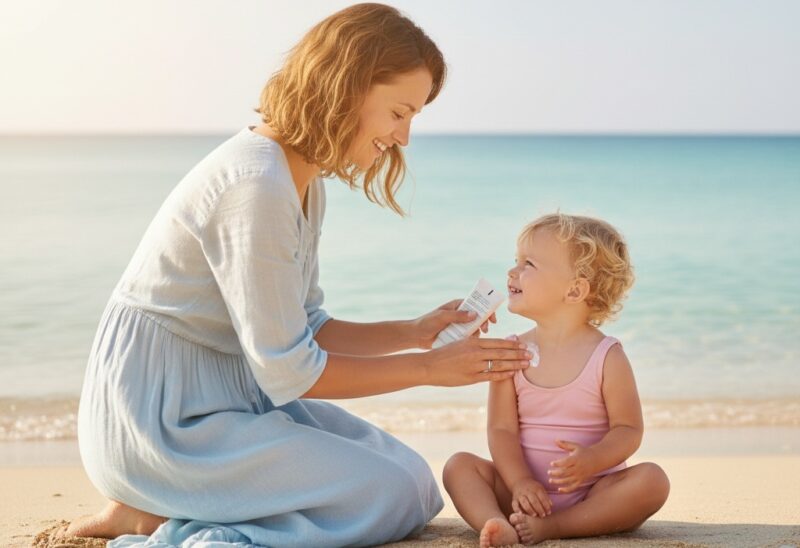
Apply baby sunscreen lotion generously 15-30 minutes before sun exposure. Most parents don’t use enough product—you’ll need about one ounce (a shot glass full) to cover a toddler’s entire body. Don’t forget easy-to-miss spots like the tops of feet, ears, and the back of the neck.
Reapply every two hours, or immediately after swimming or excessive sweating. Even “water-resistant” formulas lose effectiveness over time and with towel drying. Set a timer on your phone to help you remember.
For babies under six months, the American Academy of Pediatrics recommends minimizing sun exposure altogether. Keep infants in the shade and dress them in protective clothing. If shade isn’t available, apply a small amount of baby sunscreen lotion to exposed areas like the face and hands.
Common Mistakes to Avoid
One frequent error is waiting until you’re already outside to apply sunscreen. Baby sunscreen lotion needs time to bond with the skin before it becomes fully effective. Make application part of your getting-ready routine, just like getting dressed.
Another mistake is using expired sunscreen. Check the expiration date on your baby sunscreen lotion before each season. Expired products lose effectiveness and may separate or change texture, reducing their protective capabilities.
Don’t skip cloudy days, either. Up to 80% of UV rays can penetrate cloud cover. If you’re spending time outdoors, your baby needs sunscreen protection regardless of whether the sun is visibly shining.
Making Sun Safety a Habit
Choosing the right baby sunscreen lotion is just one piece of comprehensive sun protection. Combine it with other smart strategies: seek shade during peak sun hours (10 a.m. to 4 p.m.), dress your baby in lightweight, long-sleeved clothing, and add a wide-brimmed hat for extra face and neck protection.
Start these habits early, and they’ll become second nature for both you and your child. As your baby grows, they’ll learn that sun protection is a normal part of outdoor fun—setting them up for a lifetime of healthy skin habits.
Read Also: Soap Faces for Radiant Skin: Pure Beauty